
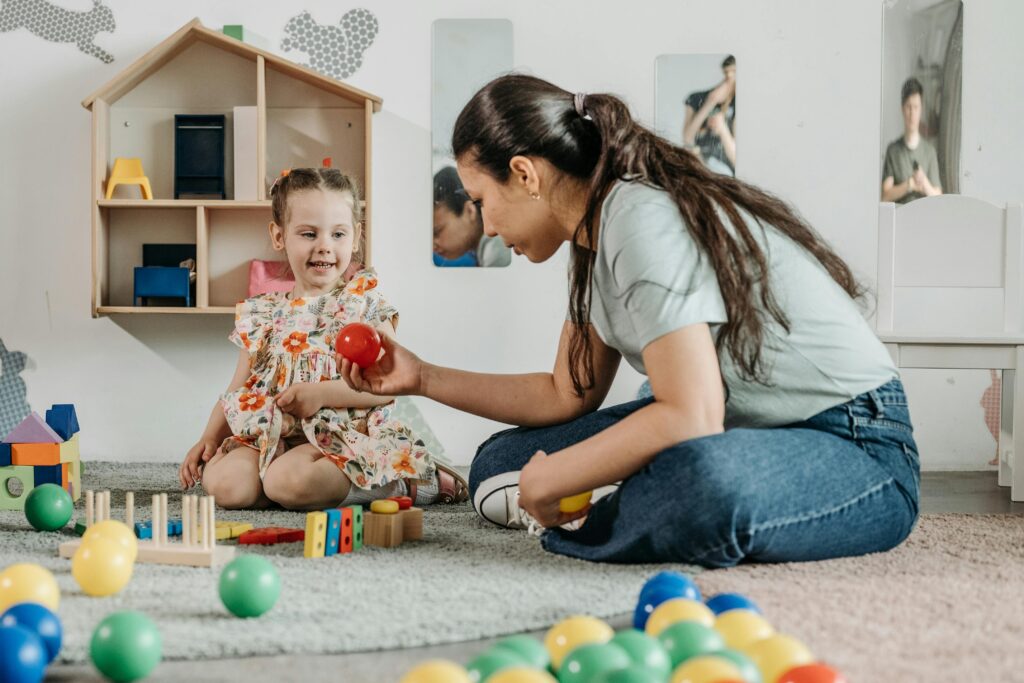
Emotional development is a vital part of early learning. Understanding and managing feelings, building empathy, and forming positive relationships are skills that set the foundation for lifelong wellbeing. At our centre, we create an environment where children can explore their emotions safely and confidently.
Our educators take a proactive approach to supporting emotional growth. Through everyday interactions, we model positive communication and teach strategies for expressing feelings in healthy ways. Simple practices—such as acknowledging emotions with phrases like “I can see you’re feeling frustrated”—help children recognise and name their own feelings, an important first step in emotional intelligence.
Play-based experiences also play a significant role in emotional development. Roleplay activities, storytelling, and group games allow children to explore different emotions and learn how to navigate them. For example, acting out scenarios with friends or puppets encourages empathy and helps them understand other perspectives.
We also prioritise building secure, trusting relationships. When children feel safe and supported, they are more likely to take positive risks, communicate openly, and develop confidence in managing challenges. Small routines, like daily greetings, check-ins, and moments of one-on-one connection with educators, strengthen this sense of security.
Finally, our centre provides calming spaces where children can regulate their emotions. Quiet reading nooks, nature corners, and mindfulness activities such as deep breathing or yoga help them develop self-regulation skills, which are crucial for resilience.
By nurturing emotional development every day, we equip children with the tools to form strong relationships, handle challenges with confidence, and thrive both in learning and in life. Supporting emotions is not just part of what we do—it’s at the heart of helping every child grow into a capable and compassionate individual.