
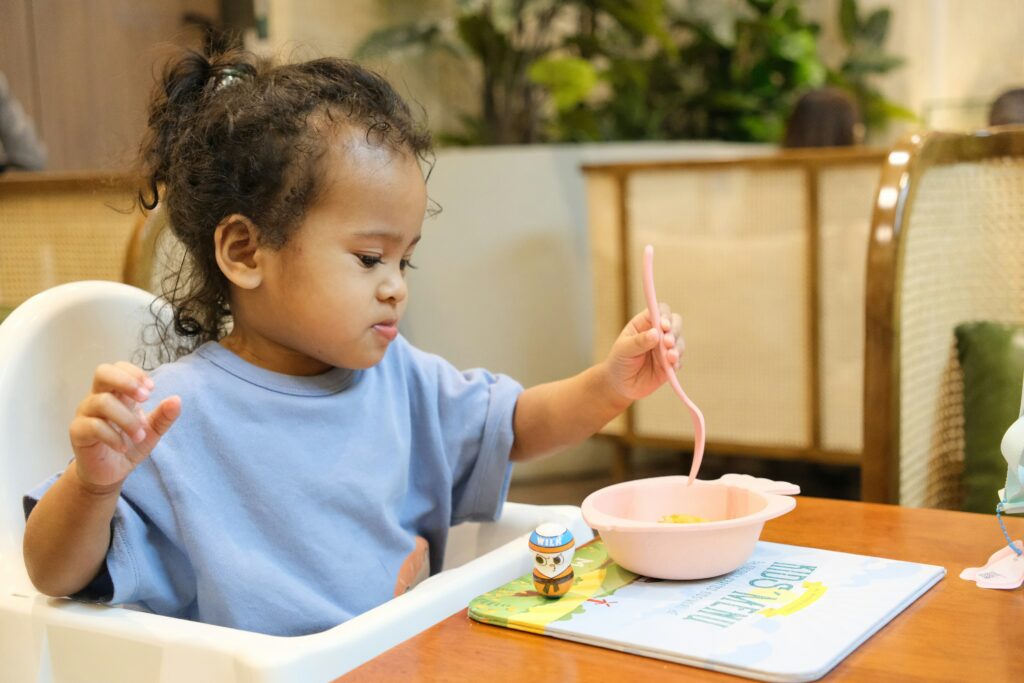
Nurturing Independence: How Little Big People Supports Confident Eaters
Most parents and educators know that feeding is more than just putting food on a plate. At Little Big People, mealtimes are where children build independence, fine motor skills, and confidence step by step. From first finger foods to mastering utensils, our Durack centre supports every stage with care and practical strategies. Keep reading to see how we help children become confident, capable eaters ready for school and beyond. For more tips on supporting your child’s eating journey at home, visit our helpful resource guide.
Understanding Feeding Development

Feeding skills grow in a clear pattern, though each child moves at their own pace. When we know what to expect, we can better support your child’s eating journey with the right tools and encouragement at the right time.
Stages of Feeding Growth
Babies start their feeding journey with simple reflexes and gradually build complex skills. From birth to three months, they master the suck-swallow pattern while being fully dependent on caregivers.
By 6-9 months, most babies show interest in food and begin to grab items with their whole hand. This palm grasp marks the start of self-feeding attempts. They watch you eat with fascination and may try to imitate your movements.
Between 12-18 months, toddlers typically progress to using their fingers with more precision. They can pick up small food pieces and bring them to their mouth with greater accuracy. Many will also try using spoons, though expect plenty of spills!
By age three, most children manage cups without lids and use utensils with growing skill. These achievements don’t just happen—they build through daily practice and the right support from caring adults.
Key Milestones to Watch
The path to independent eating includes several important markers. Between 6-12 months, watch for the pincer grasp—when your child uses thumb and forefinger to pick up small items. This precise movement shows developing fine motor control.
Around 15-18 months, many children show a strong desire to feed themselves. You might notice your toddler grabbing the spoon from you or refusing help. This push for autonomy, while sometimes messy, signals healthy development.
By age two, most children can scoop food and bring it to their mouth with minimal spilling. They also drink from open cups, though they might use both hands for stability.
Between ages three and four, children typically master using forks and can serve themselves from small containers. They show pride in these accomplishments, often saying “I can do it myself!”
These milestones matter because they build more than just eating skills. Each successful bite builds confidence, independence, and the fine motor skills needed for writing and other school tasks later on.
Creating Supportive Mealtime Environments
The right setting makes all the difference in helping children master feeding skills. A thoughtful approach to mealtimes turns everyday eating into powerful learning opportunities that build confidence and capability.
Setting Up for Success
Proper seating forms the foundation for successful self-feeding. Children need their feet supported on a floor or footrest, with knees bent at 90-degree angles. When little bodies feel secure, hands become free to focus on the important work of managing food and utensils.
Choose child-sized utensils with short, thick handles that small hands can grip easily. Small, shallow bowls make scooping simpler for beginners, while plates with high sides help prevent food from sliding off during early attempts.
Timing matters too. Plan meals when children are hungry but not overly tired. A child who’s too hungry gets frustrated quickly, while one who’s exhausted lacks the patience for practising new skills.
Create a calm atmosphere by turning off screens and keeping distractions minimal. When the focus stays on food and pleasant conversation, children learn to pay attention to their eating. This mindfulness helps them notice hunger and fullness cues—important skills for healthy eating throughout life.
Embracing Messy Exploration

Food exploration gets messy—and that’s exactly how it should be! When a baby squishes avocado between their fingers or a toddler finger-paints with yogurt, they’re gathering crucial sensory information about their food.
This hands-on learning builds comfort with different textures, temperatures, and consistencies. Children who touch their food before eating it often become more willing to try new things. The child who refuses to touch sticky foods will likely refuse to eat them too.
At Little Big People, we prepare for mess with splash mats under high chairs and keep clean-up supplies handy. We wear smiles, not frowns, when food lands on floors or faces. Our educators understand that each spill represents learning in action.
Parents sometimes worry about manners, but remember: neatness comes later. First comes comfort, confidence, and capability with food. The toddler who joyfully feeds herself with messy hands today becomes the preschooler who competently uses utensils tomorrow.
Practical Strategies for Independence
Building confident eaters happens through daily practice and thoughtful support. Simple approaches make a big difference in helping children master feeding skills at their own pace.
Encouraging Self-Feeding
Start early by offering safe finger foods alongside purees. Soft, small pieces of banana, well-cooked vegetables, or pasta give babies practice picking up food and bringing it to their mouths. This builds hand-eye coordination and mouth awareness.
Model eating with enthusiasm. Children learn by watching you use utensils and enjoy various foods. Eat together whenever possible, making mealtimes social learning experiences.
Resist the urge to take over when children struggle. Instead, try “hand-over-hand” guidance—placing your hand over theirs to guide the spoon, then gradually reducing support as they gain confidence. This teaches the movement pattern without removing their sense of doing it themselves.
Praise effort rather than results: “You worked hard scooping that yogurt!” celebrates the learning process even when most of the yogurt missed the mouth. This builds persistence through the messy learning stage.
Mix practice into playtime too. Water play with cups and spoons builds the same motor skills without mealtime pressure. Pretend picnics with stuffed animals let children practice serving and eating in a fun context.
Partnering with Families in Feeding Development
Building eating skills works best when families and educators work together. At Little Big People, we share what we notice about your child’s feeding progress and which skills they’re currently practising at the centre.
We ask about your family’s mealtime routines and food preferences. Understanding cultural approaches to feeding helps us support your child’s experience with respect and consistency. Some families use spoons from the start, while others emphasise finger foods—both approaches work when applied consistently.
Regular communication helps track progress together. We might suggest: “Maya is showing interest in pouring her own water. You might try a small pitcher at home this weekend.” Or we might ask: “Have you noticed Liam using his fork at home? He’s been practising with it here.”
We share practical tips that work in our setting, like using plates with suction cups to prevent tipping, or offering two spoons—one for the child to practice with while you help with the other. These simple strategies often make mealtimes smoother at home, too.
When challenges arise, we problem-solve together. If a child struggles with specific textures or seems frustrated with utensils, we can adjust our approach or connect you with specialists if needed. Our goal is always the same: raising confident, capable eaters who approach food with joy and independence.
By working as partners in your child’s feeding journey, we create a consistent, supportive path toward mealtime success. The skills built now—from first finger foods to confident utensil use—prepare children not just for school lunches but for a lifetime of healthy relationships with food.
National Quality Standards
Our focus on feeding development supports multiple areas of the National Quality Standard:
Quality Area 1 – Educational Program and Practice: Feeding experiences are planned learning opportunities supporting development.
Quality Area 2 – Children’s Health and Safety Proper nutrition, safe feeding practices, and appropriate development support children’s health.
Quality Area 5 – Relationships with Children Mealtimes are opportunities for connection, conversation, and relationship building.
Quality Area 6 – Collaborative Partnerships with Families. Working together on feeding development supports consistency and accelerates progress.
Connect With Little Big People
Want to see how we support feeding development at our centre? Visit us at 56 Durella Street, Durack.
Watch how we create stress-free, joyful mealtimes where children practice independence, build confidence, and develop the self-care skills they need for school and life.
Give us a call on 07 2111 4187 or email enrolmentsdurack@www.littlebigpeople.com.au to arrange a tour. We’re open Monday to Friday and would love to show you how we support development through everyday experiences like mealtimes.
Check out our website at www.littlebigpeople.com.au to learn more about our holistic approach to child development.
Because learning to feed yourself isn’t just about nutrition—it’s about independence, confidence, and capability that extends far beyond the lunch table.
Recommended Resources on Feeding Development
Professional Guidance:
-
Occupational Therapy Australia – Feeding Development
https://otaus.com.au/
Professional resources on typical feeding milestones and supporting feeding skills development. -
Speech Pathology Australia – Feeding and Swallowing
https://www.speechpathologyaustralia.org.au/
Information on oral motor development, feeding difficulties, and when to seek support. -
Raising Children Network – Feeding and Nutrition
https://raisingchildren.net.au/babies/breastfeeding-bottle-feeding-solids
Evidence-based Australian resource on feeding development from infancy through school age.
Nutrition and Healthy Eating:
-
Nutrition Australia
https://nutritionaustralia.org/
Guidelines on age-appropriate nutrition and developing healthy eating habits. -
Queensland Health – Healthy Eating
https://www.health.qld.gov.au/
State health information on nutrition for children and feeding practices.
Feeding Difficulties and Support:
-
Australian Feeding and Swallowing Association
http://www.feedingandswallowing.com.au/
Resources on feeding difficulties, sensory issues, and specialist support options. -
NDIS – Therapy Supports
https://www.ndis.gov.au/
Information on accessing allied health support for feeding development when needed.
Early Childhood Practice:
-
Early Childhood Australia – Nutrition and Mealtimes
https://www.earlychildhoodaustralia.org.au/
Professional resources on creating positive mealtime environments in early learning. -
ACECQA – Health and Safety
https://www.acecqa.gov.au/
National quality framework guidance on food safety and nutrition in early learning.
Additional Support:
-
Better Health Channel – Child Development
https://www.betterhealth.vic.gov.au/
Victorian government resource on typical development including self-care skills.
These resources support educators and families in fostering healthy feeding development and addressing concerns when they arise.