
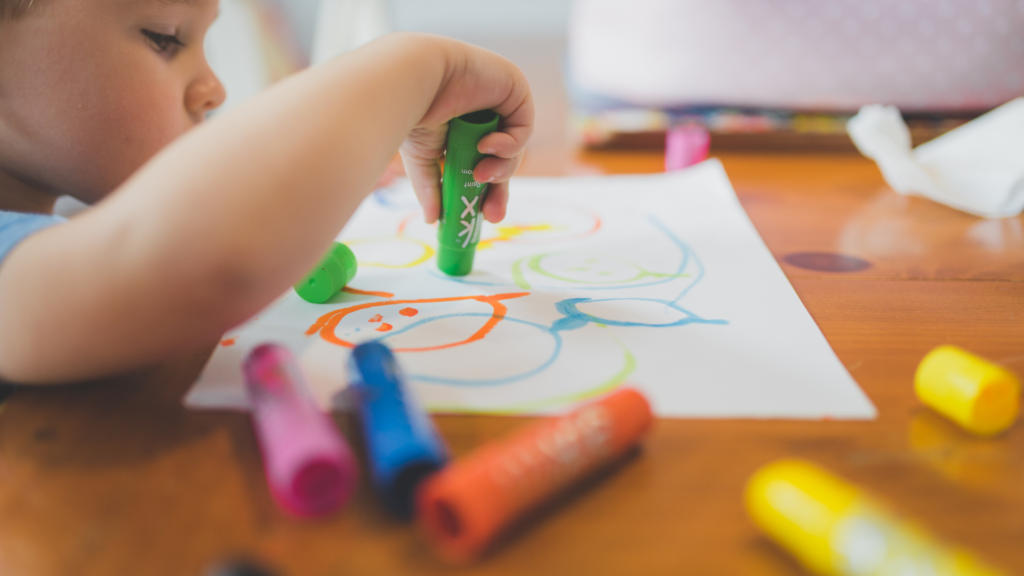
There is a particular kind of courage that lives in a small body walking through a new door for the first time.
It is not bravado. It is not performance. It is the quiet, genuine courage of a child who has been held so securely that something new does not feel threatening — it feels like the next part of their story.
At Little Big People Early Learning in Durack, we take the responsibility of that story seriously. Room transitions are not administrative events for us — they are developmental milestones that deserve the same careful, warm, family-centred attention we bring to everything we do.
Here is how we approach every transition in your child’s journey at our centre — and why the way we do it matters far more than most families realise.
Our Approach: Child-Centred, Family-Partnered, Relationship-First
At Little Big People, our philosophy is clear: every child is seen as capable, curious, and unique. We honour their individuality by creating opportunities for them to lead their own learning — and this applies as much to how we handle transitions as it does to any other part of our program.
We also believe, fundamentally, that families are the first and most important educators in a child’s life. That means no transition at our centre happens without your knowledge, your involvement, and your confidence that the timing is right for your child.
The Early Years Learning Framework V2.0 (EYLF), which guides all early childhood education and care services in Australia, places belonging, being, and becoming at the heart of quality learning. Transitions touch all three: a child moving rooms must re-establish belonging, navigate their sense of self in a new context, and step toward becoming something they have not yet been. When these transitions are handled with genuine care and intention, they become some of the most powerful developmental experiences a child can have.
The Little Big People Room Journey
Our centre supports children from the earliest months of life through to school age, with a pathway of rooms that builds on itself — each one enriching what came before and preparing for what comes next.
🍼 Nursery (0–24 months) — Newly renovated, purpose-built for our youngest learners
👣 Toddler Room (2–3 years) — Self-selection, independence, and joyful exploration
🌿 Pre-Kindergarten Room (3–4 years) — Peer-to-peer interaction and environmental agency
🎓 Kindergarten Room (4–5 years) — QLD Government Approved Kindy program, school readiness
🏫 OSHC (5–12 years) — Bus pick-up and drop-off, homework, craft, physical activity
Nursery to Toddlers: A Baby Becomes a Toddler
Our Nursery room has been completely renovated — a beautiful, purpose-built space for children aged 0–24 months, designed around the understanding that the first two years of life are among the most neurologically significant a human being will ever experience.
In the Nursery, we work closely with families to continue the routines and practices already established at home. We understand that continuity is everything for young babies: a familiar settling routine, the same words used at nap time, the knowledge that the people caring for your baby know them as an individual and not as a room placement.
When a Nursery child begins showing signs of readiness for the Toddler room, the transition is handled with great care:
Signs your baby may be ready to move:
Walking independently and with increasing confidence
Showing interest in what older children are doing
Beginning to communicate through words, signs, or clear gestures
Demonstrating increasing curiosity about the wider environment
Their Nursery educators observing consistent developmental readiness cues
How we support the Nursery–Toddler transition:
Weeks before any formal move, your child’s Nursery educators begin sharing detailed knowledge with the Toddler team — every routine, preference, comforter, settling technique, and personality quirk that matters. Your child then makes gradual, friendly visits to the Toddler room, always accompanied by someone they already trust, until the space and people feel familiar.
Families are included in every step of this conversation. We never move a child without your knowledge and confidence. We share our observations, invite your reflections, and move only when the whole team — including you — agrees the time is right.
Toddler Room to Pre-Kindergarten: Growing Into Themselves
In our Toddler room, children aged 2–3 years are encouraged to make choices and embrace their own ideas. We have found that children learn best when something is of interest to them — which is why self-selection is central to the Toddler room experience. Children choose their play, lead their investigations, and build the sense of agency that developmental researchers identify as foundational to confident, lifelong learning.
The move to our Pre-Kindergarten room (3–4 years) deepens this independence while introducing the richer social world of older children. Our Pre-Kindy program teaches children how to use their environment positively and encourages meaningful peer-to-peer interaction — the social skills that are every bit as important for school readiness as literacy and numeracy.
Signs your toddler may be ready for Pre-Kindy:
Playing alongside and beginning to play with other children, not just near them
Using language to communicate needs, ideas, and feelings
Showing growing independence in self-care tasks
Demonstrating sustained interest and focus during activities
Managing transitions within the Toddler day with increasing ease
How we support this transition:
The same gradual, relationship-first approach applies here. Pre-Kindy educators begin building a relationship with your child before the formal move — visiting the Toddler room, joining play experiences, and becoming a familiar, trusted face. Your child visits Pre-Kindy with familiar companions. Families receive clear communication throughout, including the observations that have informed the team’s timing.
Parents are also reminded at this stage of something our philosophy holds deeply: you are not just observers of this transition — you are essential participants. Your knowledge of your child at home, the things they talk about, the games they invent, the worries they carry — all of this informs how our educators support the move.
Pre-Kindy to Kindy: The Year That Changes Everything
Our Queensland Government Approved Kindergarten Program is one of the things our families love most about Little Big People — and the transition into this room is one of the milestones that families most often tell us they feel both excited and nervous about.
Our Kindy room is designed to prepare children holistically for primary school: building physical, social, emotional, cognitive, and language skills in an environment that offers a range of carefully chosen experiences and resources. Our Kindy educators are always listening, responding, and observing — supporting each child and offering the most appropriate experiences, resources, books, and songs for where they are right now.
The transition into Kindy is intentionally structured to mirror the kinds of shifts children will experience when they move to primary school — making it not just a room change, but a dress rehearsal for the big transition ahead.
What children are developing in Kindy:
School-readiness skills: independence, sustained focus, group participation
Early literacy foundations: print knowledge, phonological awareness, shared reading
Early numeracy: number concepts, pattern recognition, mathematical language
Social-emotional competence: self-regulation, conflict resolution, empathy
Physical development: gross and fine motor skills through active, varied play
The transition into our Kindy room involves orientation visits, meetings with your child’s new educator, and detailed sharing of your child’s learning history. Every child transitioning to Kindy at Little Big People does so knowing their new educator already knows their name — and already knows their story.
Kindy to Big School: The Transition That Stays With You
The final transition in the Little Big People journey is the one that lives longest in family memory: the first day of primary school.
Our Kindy program is built to make this transition one of excitement rather than anxiety. By the time children leave our care, they carry with them the practical skills, the emotional resilience, and — most importantly — the deep, embodied confidence that comes from years of being genuinely known, genuinely challenged, and genuinely loved in a learning environment.
Our educators, who are extensively qualified and committed to ongoing professional development and reflective practice, provide rich observations and insights to families during the school transition period. We know local schools. We understand their expectations. And we work with you to ensure your child arrives at the school gate ready to walk through it with their head up.
The Australian Institute of Family Studies consistently highlights that smooth transitions to school are built not just on academic readiness but on a child’s emotional security, social confidence, and sense of identity — all things that a quality early childhood journey builds, year by year, room by room.
What You Can Do at Every Stage
The most important thing any family can do at every transition stage is stay connected — to your child, to your educators, and to your own instincts.
Talk about the new room. Use positive, honest language. Tell your child what is coming, what it will feel like, and what will stay the same. Children who understand transitions are less frightened by them.
Trust your observations. You know your child better than anyone. If something feels off, say so. Our educators genuinely want to hear from you — your insight is not an interruption, it is an essential part of the picture.
Keep home rhythms consistent. When big changes happen at the centre, predictable routines at home are an anchor. Regular bedtimes, consistent meals, familiar comforters — these are the small things that hold a child steady when the larger world is shifting.
Celebrate the milestone. Moving rooms is growing up. Let your child feel proud of it. Take a photo at the door on that first day. Mark it somehow. The moments we name are the moments children carry.
Come and See the Journey for Yourself
If you are a Durack family beginning to think about early learning — or if your child is already with us and you have questions about upcoming transitions — we warmly invite you to reach out, come for a tour, and meet the educators who will hold your child’s story with care.
And remember: our FREE Community Open Play Mornings on the first Monday of every month are a beautiful, pressure-free way to experience Little Big People before any enrolment decision. Come and play. Come and see.
📞 07 2111 4187
📧 enrolmentsdurack@littlebigpeople.com.au
📍 56 Durella Street, Durack QLD 4077
🌐 Book a Tour →
📘 Facebook →
📸 Instagram →
Big dreams start small. And they start right here.
Sources: Early Years Learning Framework V2.0 (EYLF) — Belonging, Being and Becoming, Australian Government Department of Education (acecqa.gov.au); Queensland Government Approved Kindergarten Program — Queensland Department of Education (earlychildhood.qld.gov.au); Australian Institute of Family Studies — Supporting transitions in early childhood (aifs.gov.au); ACECQA — National Quality Standard, Quality Area 1: Educational Programme and Practice (acecqa.gov.au); Raising Children Network — Starting childcare and early learning transitions (raisingchildren.net.au); Queensland Kindergarten Learning Guidelines (QKLG) 2024, Queensland Curriculum and Assessment Authority (qcaa.qld.gov.au).